

Joint stiffness can make everyday movements feel heavy, slow, and uncomfortable. While it is commonly associated with aging, it can also be linked to inflammation, autoimmune conditions, repetitive strain, excess body weight, or post-exercise recovery. Alongside medical care, nutrition, and lifestyle changes, medicinal mushrooms are gaining attention as a natural way to support joint comfort, mobility, and overall resilience.
At Dr Noels Mushroom Powders, we focus on evidence-informed formulations that work with the body’s own repair systems. Below is an overview of how Lion’s Mane, Cordyceps, Chaga, Reishi, and Turkey Tail may support joint health, along with why the quality and bioavailability of your mushroom powders matter.
How Medicinal Mushrooms May Support Joint Stiffness
While each mushroom has its own unique profile, several shared mechanisms are relevant for joint stiffness:
- Modulation of inflammation pathways such as NF‑κB and COX‑2
- Antioxidant support to reduce oxidative stress that can damage cartilage
- Immune modulation, which can be relevant where immune imbalance drives joint issues
- Support for circulation, energy production, and recovery after activity
Research is still developing and medicinal mushrooms should not replace medical treatment. However, early evidence and traditional use suggest they can be a valuable adjunct for many people seeking better joint comfort.
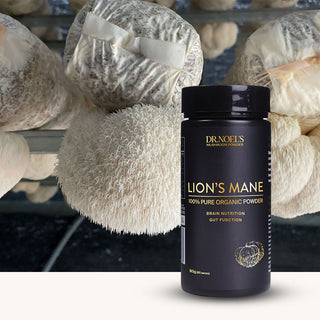
Lion’s Mane: Nerve and Recovery Support
Lion’s Mane (Hericium erinaceus) is best known for supporting brain and nerve health, but these same properties may indirectly assist joint issues. Compounds such as hericenones and erinacines have been shown in animal and lab studies to promote nerve growth factor and support nerve regeneration, which may influence pain signaling and sensitivity around affected joints.
Lion’s Mane also shows antioxidant and anti-inflammatory activity in preclinical research, including protective effects against oxidative damage in tissues. By reducing oxidative stress, Lion’s Mane may help protect joint structures and surrounding soft tissues that are susceptible to wear, tear, and inflammatory changes. If you’re interested in trying a high-quality supplement, consider our Lion’s Mane powder for daily support.
Many people with joint stiffness also struggle with fatigue, poor sleep, and low mood. Lion’s Mane has been studied in small human trials for mood and cognitive benefits, which can indirectly support adherence to exercise, stretching, and rehabilitation routines that are crucial for joint mobility.
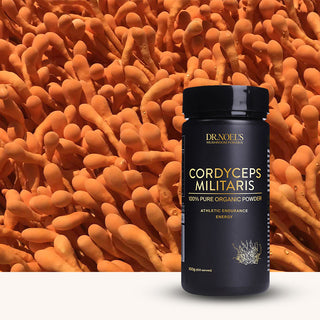
Cordyceps: Energy, Circulation and Exercise Recovery
Cordyceps powder (Cordyceps militaris and Cordyceps sinensis) is traditionally used to improve stamina and resilience. For joint stiffness, its most relevant roles include:
- Supporting mitochondrial function and cellular energy, helping the body repair and adapt after movement
- Mild vasodilatory and circulation-supporting effects that can aid nutrient delivery to joint tissues
- Anti-inflammatory and antioxidant actions seen in animal and in vitro research, including downregulation of pro-inflammatory cytokines such as TNF‑α and IL‑1β
Several human studies show Cordyceps can improve exercise capacity and reduce fatigue in older adults and active individuals. Better endurance and recovery can encourage gentle, regular movement, which is one of the most important non-drug strategies for reducing joint stiffness and maintaining range of motion.
For people whose joints feel stiff after activity or in the morning, consistent use of Cordyceps may help the body cope better with load and recovery over time.
Chaga: Antioxidant Shield for Joint Tissues
Chaga powder (Inonotus obliquus) is rich in polyphenols, melanin-like pigments, and betulinic acid derivatives, which contribute to its powerful antioxidant profile. Oxidative stress is thought to play a central role in cartilage breakdown and the progression of degenerative joint conditions.
Laboratory studies show Chaga extracts can:
- Scavenge free radicals and reduce lipid peroxidation
- Modulate inflammatory mediators, including nitric oxide and certain cytokines
- Protect tissues from oxidative DNA and protein damage
By dampening oxidative stress and supporting a healthier inflammatory balance, Chaga may help slow the cumulative wear on joint structures and support more comfortable movement. It is often used alongside other medicinal mushrooms for a synergistic effect.
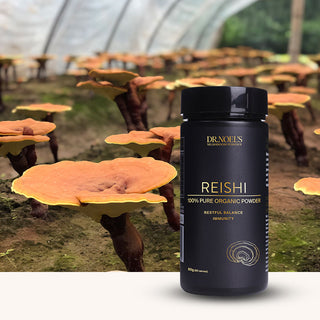
Reishi: Calming Inflammation and the Stress Response
Reishi powder (Ganoderma lucidum) is often called the “mushroom of immortality” in traditional systems. It has a long history of use for immune balance, stress resilience, and overall vitality. For joint stiffness, Reishi contributes in several important ways:
-
Immune modulation
Triterpenes and polysaccharides in Reishi help balance overactive or underactive immune responses in research settings. This is especially relevant where immune imbalance contributes to joint discomfort and morning stiffness. -
Anti-inflammatory support
Preclinical studies indicate Reishi triterpenoids can inhibit pathways involved in inflammation and tissue breakdown, which are implicated in degenerative joint conditions. -
Stress and sleep
Many people with joint pain find their symptoms worsen with poor sleep and chronic stress. Reishi is commonly used to promote calm, better sleep, and a more balanced stress response. Restorative sleep is crucial for tissue healing, pain perception, and day-to-day resilience.
Taken consistently, Reishi may help you feel calmer, recover more effectively, and cope better with the ups and downs of living with stiff or achy joints.
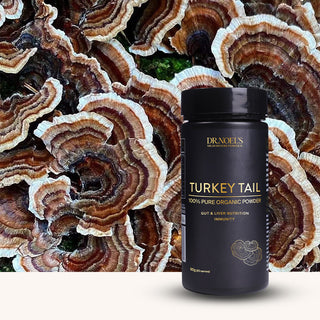
Turkey Tail: Gut, Immunity and Inflammation
Turkey Tail powder (Trametes versicolor) contains the well-researched polysaccharides PSK and PSP, which are known for immune modulation and gut-related benefits. While it is best known in the context of immune support, it can also be relevant to joint health because:
- Gut microbiome balance is increasingly linked to systemic inflammation and joint conditions
- Turkey Tail’s prebiotic polysaccharides can encourage beneficial gut bacteria, which in turn may support lower systemic inflammation
- A more balanced immune response may help reduce the intensity of inflammatory flares in susceptible individuals
Although direct human studies on Turkey Tail and joint stiffness are limited, its effects on immunity, the gut, and systemic inflammation make it a valuable inclusion in a joint support protocol, especially when combined with other mushrooms and an anti-inflammatory diet.
Why Dr Noels Mushroom Powders Stand Out
When it comes to medicinal mushrooms, quality and bioavailability determine how much benefit you actually receive. Not all powders are equal.
Dr Noels Mushroom Powders are formulated to maximise active compound delivery and consistency:
-
Dual extracted
We use both hot water extraction and alcohol extraction. This pulls out water-soluble polysaccharides such as beta glucans, as well as alcohol-soluble triterpenes and other compounds. You receive a broader, more complete spectrum of beneficial molecules compared to simple ground mushroom powders. -
Highest bioavailability
Our extraction process breaks down indigestible fungal cell walls and concentrates active constituents. This enhances absorption and bioavailability so more of the active compounds can reach your bloodstream and tissues rather than passing straight through your digestive system. -
Certified organic
Our mushrooms are grown and processed following certified organic standards, which helps minimise exposure to pesticides and synthetic inputs while preserving the natural integrity of the mushrooms.
With over 15,000 customers, a significant proportion of people who use Dr Noels Mushroom Powders consistently report meaningful improvements in aspects of their health such as joint comfort, recovery after activity, energy, sleep, and overall wellbeing. While experiences vary and results cannot be guaranteed, we find that consistent daily use for at least 6 to 12 weeks is typically when many customers begin to notice changes.
Using Dr Noels Mushroom Powders for Joint Stiffness
For joint support, many people combine two or more mushrooms. A common pattern is:
- Lion’s Mane for nerve health, mood, and cognitive support that can help with coping and rehabilitation
- Cordyceps for energy, circulation, and recovery after activity
- Chaga as a daily antioxidant shield
- Reishi in the evening for immune balance, inflammation support, and better sleep
- Turkey Tail to support gut health and systemic inflammatory balance
Powders can be mixed into smoothies, coffee, tea, soups, or yoghurt. Consistency is key. Medicinal mushrooms tend to work gradually, supporting deeper systems rather than providing instant relief like a painkiller.
Always consult your healthcare practitioner before adding medicinal mushrooms if you are on medication, have an autoimmune or bleeding disorder, are pregnant or breastfeeding, or have complex medical conditions.
FAQs about Medicinal Mushrooms and Joint Stiffness
1. How long does it take for mushroom powders to help with joint stiffness?
Most people will not notice changes overnight. The benefits of medicinal mushrooms are usually gradual. Many customers start to notice differences in joint comfort, morning stiffness, or recovery after activity around the 6 to 12 week mark of consistent daily use. Longevity and structural support take time, so we suggest at least a three month trial.
2. Can I take medicinal mushrooms alongside my current joint medication or supplements?
In many cases mushrooms can be combined with conventional medications and joint supplements such as glucosamine, chondroitin, or omega‑3s. However, mushrooms like Reishi and Cordyceps may interact with blood thinning medication, blood pressure drugs, or immune suppressants. Always discuss new supplements with your doctor or pharmacist before starting.
3. Which single mushroom is best if my main concern is morning joint stiffness?
If you prefer to begin with one product, Reishi or Chaga are common starting choices for stiffness driven by inflammation, while Cordyceps is often preferred when stiffness is linked to heavy activity and poor recovery. Many customers ultimately use a blend for broader coverage, which is why Dr Noels offers combinations that target multiple mechanisms at once.
4. Will mushroom powders upset my stomach or cause side effects?
Most people tolerate medicinal mushrooms very well, especially when starting with small amounts and taking them with food. Occasionally, people may notice temporary digestive changes, mild headache, or shifts in sleep when first introducing them. If you are sensitive, begin with half the suggested serving and increase slowly. Discontinue and speak with a health professional if you experience persistent or severe symptoms.
5. How do I know if a mushroom powder is potent enough to help my joints?
Look for products that are dual extracted, specify beta glucan content or standardised actives, are free from fillers, and are certified organic. Whole ground mushroom without extraction is often less bioavailable because the active compounds remain locked in the tough cell wall. Dr Noels Mushroom Powders are dual extracted and crafted for high bioavailability, providing concentrated, consistent levels of the key compounds studied for immune and inflammatory support.
Selected Sources
- Friedman, M. Chemistry, Nutrition, and Health‑Promoting Properties of Hericium erinaceus (Lion’s Mane) Mushroom. Journal of Agricultural and Food Chemistry, 2015.
- Zhou, X et al. Cordyceps fungi: Natural products, pharmacological functions and developmental products. Journal of Pharmacy and Pharmacology, 2009.
- Song, F et al. Protective effects of Chaga mushroom (Inonotus obliquus) polysaccharides on oxidative stress in various models. International Journal of Biological Macromolecules, 2013.
- Paterson, RRM. Ganoderma – A therapeutic fungal biofactory. Phytochemistry, 2006.
- Ooi, VEC, Liu, F. Immunomodulation and anticancer activity of polysaccharide‑protein complexes from mushrooms: An overview. Current Medicinal Chemistry, 2000.