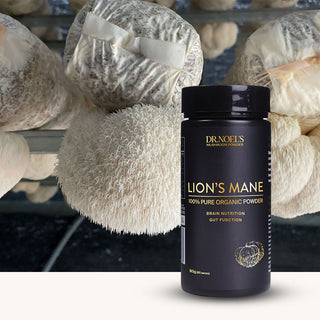


Lion’s Mane mushroom, also known as Hericium erinaceus, has long been valued as both a culinary mushroom and a traditional wellness ingredient. In China, it is commonly called “Hou Tou Gu,” meaning “monkey head mushroom,” because of its unique fluffy appearance. It is also sometimes known as the “hedgehog mushroom.”
For centuries, Lion’s Mane has been appreciated for its delicate flavour, rich nutritional profile, and traditional use in supporting digestion, vitality, and overall wellbeing. In traditional Chinese herbal references, Lion’s Mane is described as gentle in nature and traditionally associated with nourishing the body, supporting the digestive system, and helping those who feel weak or run down.
Today, modern research has taken a closer look at the natural compounds found in Lion’s Mane. Among these, polysaccharides are considered one of the most important active components. These naturally occurring carbohydrates have attracted scientific interest for their potential roles in immune balance, antioxidant protection, gut health, and general wellness.

What Are Lion’s Mane Polysaccharides?
Polysaccharides are complex carbohydrates found in many medicinal mushrooms. In Lion’s Mane, they are among the key bioactive compounds studied by researchers, alongside other components such as nucleotides, terpenoids, and phenolic compounds.
Much of the current research on Lion’s Mane polysaccharides has been conducted in cell, animal, and laboratory models. While these studies do not replace human clinical evidence, they provide valuable insight into how Lion’s Mane may interact with the body’s natural systems.

1. Immune System Support
One of the most widely studied areas of Lion’s Mane polysaccharides is their potential role in immune regulation.
Preclinical research suggests that Lion’s Mane polysaccharides may help support immune function by interacting with immune cells such as macrophages, natural killer cells, dendritic cells, neutrophils, and monocytes. These cells play important roles in the body’s natural defence system.
Studies have also shown that Lion’s Mane polysaccharides may influence immune-related signalling pathways, including NF-κB, MAPK, and PI3K/AKT pathways. These pathways are involved in how immune cells communicate and respond to internal and external stressors.
Another interesting area of research is the gut-immune connection. Some studies suggest that Lion’s Mane polysaccharides may help support a healthier gut microbiome by encouraging beneficial bacteria and short-chain fatty acid production. Since a large part of the immune system is closely connected with the gut, this may be one way Lion’s Mane supports immune balance.
2. Antioxidant Protection
Oxidative stress occurs when the body produces more free radicals than its natural antioxidant systems can manage. Over time, oxidative stress may contribute to cellular damage and overall ageing processes.
Laboratory studies suggest that Lion’s Mane polysaccharides may help protect cells from oxidative stress by reducing the accumulation of reactive oxygen species, often known as ROS. Some research also indicates that Lion’s Mane polysaccharides may support antioxidant enzyme activity, including enzymes such as superoxide dismutase, catalase, and glutathione peroxidase.
In several in vitro studies, Lion’s Mane polysaccharides demonstrated free radical scavenging activity, including activity against DPPH, hydroxyl, superoxide, and ABTS radicals. These findings suggest that Lion’s Mane may contribute to antioxidant defence, although further human studies are still needed.
3. Digestive and Gastric Support
Lion’s Mane has a long traditional history of use for digestive wellbeing, and modern research is beginning to explore this area in more detail.
The stomach lining, or gastric mucosa, acts as a protective barrier between stomach tissue and digestive acids. When this barrier is weakened, the stomach may become more vulnerable to irritation and damage.
Preclinical studies suggest that Lion’s Mane polysaccharides may help support the integrity of the gastric lining by promoting antioxidant activity, supporting healthy inflammatory responses, and encouraging the repair and renewal of gastric epithelial cells.
Research has also explored how Lion’s Mane polysaccharides may influence protective factors such as nitric oxide, prostaglandins, epidermal growth factor, and vascular endothelial growth factor. These compounds are involved in maintaining normal tissue repair and mucosal protection.
4. Gut Barrier and Microbiome Health
Beyond the stomach, Lion’s Mane polysaccharides have also been studied for their potential effects on intestinal health.
Animal and laboratory studies suggest that Lion’s Mane polysaccharides may help support gut barrier function by influencing tight junction proteins and mucin production. These are important for maintaining the integrity of the intestinal lining.
Some studies have also examined Lion’s Mane polysaccharides in relation to gut microbiota balance. Research suggests they may help increase beneficial short-chain fatty acid production, which plays an important role in gut health, immune function, and overall metabolic wellbeing.
5. Cellular Health Research
Lion’s Mane polysaccharides have also been investigated in laboratory models related to cellular health.
Some cell-based studies have explored how Lion’s Mane polysaccharides and their derivatives may influence apoptosis, which is the body’s natural process of removing damaged or abnormal cells. These studies suggest that certain Lion’s Mane polysaccharide compounds may interact with mitochondrial pathways and cellular signalling mechanisms.
It is important to note that this research is still at an early, preclinical stage. These findings should not be interpreted as evidence that Lion’s Mane can prevent or treat cancer or any other disease. Rather, they highlight an area of scientific interest that requires further research, especially in human clinical studies.
6. Liver and Metabolic Health Research
Emerging animal studies have also investigated the potential role of Lion’s Mane polysaccharides in liver and metabolic health.
Some research suggests that Lion’s Mane polysaccharides may help support antioxidant activity in the liver by increasing natural antioxidant enzymes and reducing markers associated with oxidative stress.
Other studies have explored the relationship between Lion’s Mane polysaccharides, gut-liver communication, and metabolic balance. This includes research into glucose metabolism, lipid metabolism, and the gut microbiome. While promising, these findings are mostly based on preclinical models and should be viewed as early-stage research.
7. Healthy Inflammatory Response
Inflammation is part of the body’s natural defence and repair system. However, maintaining a balanced inflammatory response is important for long-term wellbeing.
Research suggests that Lion’s Mane polysaccharides may help modulate inflammatory signalling pathways, including NF-κB, and may influence the expression of inflammatory markers such as IL-1β, IL-6, and TNF-α in preclinical models.
This does not mean Lion’s Mane acts like a pharmaceutical anti-inflammatory drug. Instead, current research suggests it may help support the body’s natural regulatory systems.
Why Extraction Quality Matters

The beneficial compounds in mushrooms are not always easy for the body to access in raw form. Mushroom cell walls contain chitin, a tough natural fibre that can make active compounds less bioavailable unless properly processed.
This is why extraction methods matter.
A high-quality Lion’s Mane extract is designed to concentrate beneficial compounds such as polysaccharides and beta-glucans, making the mushroom’s natural components easier to incorporate into a daily wellness routine.
Final Thoughts
Lion’s Mane mushroom is much more than a culinary delicacy. It is a traditional functional mushroom with a growing body of scientific interest behind it.
Research into Lion’s Mane polysaccharides suggests potential benefits for immune balance, antioxidant protection, digestive wellbeing, gut health, and general cellular health. While many findings are still based on laboratory and animal studies, they help explain why Lion’s Mane has become one of the most respected mushrooms in modern wellness.
As with all functional foods and supplements, Lion’s Mane is best used as part of a balanced lifestyle that includes a nutritious diet, regular movement, adequate sleep, and professional healthcare guidance when needed.